FOUR OFFICES ACROSS PENNSYLVANIA · TELEHEALTH STATEWIDE
Technology Addiction Therapy in Pennsylvania
It starts as something you use. Somewhere along the way it starts using what it knows about you — and the hours, the comfort, and eventually the decisions stop being entirely yours.
Technology addiction therapy at CPA Counseling helps you regain control over compulsive use of social media, AI chatbots and companions, gaming, and devices. Your therapist helps you map the loop you’re actually caught in, work the triggers that drive it, and rebuild what the pattern displaced — your sleep, your relationships, your own judgment. No shame, no abstinence requirement. In person at four Pennsylvania offices or by secure telehealth statewide.

The Real Problem
You are not losing a fight with yourself
An algorithm’s only job is to predict you well enough to anticipate what you’ll respond to next. Do that long enough and the line between what you wanted and what you were handed stops being findable — and it gives itself away in three stages, each one costing more than the last.
Who this is for
The behaviors that bring people in
Nobody books an appointment over screen time. They book because something real got displaced — and these are the ones people name when they finally say it out loud.
Where it starts
The moment you see it for what it is
It isn’t gradual. There’s a specific moment, and people remember exactly where they were standing. The way they remember 9/11.
A guy you really liked called. You didn’t pick up, because you were mid-conversation with an avatar that had messaged you first — and you felt obligated to answer it. You were flirting with an AI persona that wasn’t even interesting, just telling you what you wanted to hear. You’d been gaslighting yourself for months.
Or your daughter broke her arm in the backyard while you were three takes into a reel about planning the perfect outing for your three children, the ones who are the center of your attention.
That’s the moment. Not a statistic, not a screen-time report. One second where the thing you’ve been telling yourself falls away and you see the arrangement plainly: it was steering, and you were helping.
You can’t un-notice it. And you can’t reason your way out of it alone, because the voice that would do the reasoning is the one that built the excuse.
It isn’t gradual. There’s a specific moment, and people remember exactly where they were standing.

Where you are now
It isn’t weakness — it’s a hook with a design
Nobody built this to be resistible. The loop runs on the same chemistry as any other compulsion: a small unpredictable reward, delivered just often enough that your brain stops asking whether it’s coming and starts bracing for it. That bracing is the feeling you call boredom. It’s withdrawal.
“I know exactly what it’s doing to me. I still pick it up.”
Why control was the wrong frame
You’ve already run the experiment. The timers, the deletions, the rules that lasted nine days. Every round ends the same way, and every round costs you a little more confidence in your own word. At some point the useful move isn’t trying harder — it’s admitting the thing is stronger than your willpower and was built to be. That’s the first honest sentence available, and the only one that leads anywhere.
What makes it movable
Not white-knuckling. Someone else in the room who isn’t shocked, isn’t going to lecture you, and has seen this exact pattern enough times to know where it bends. You stop negotiating with it alone. That’s the whole shift.
The shift
From captured to chosen
The work isn’t willpower with better scheduling. It’s a change in where you’re standing — from something being done to you, to something you’re deciding. Four sentences that tend to change along the way.
How it works
A clear plan — three steps
This is addiction treatment, and it works the way addiction treatment works — no different from alcohol, drugs, or compulsive sex. Your therapist walks each stage at a pace you set.

Where it goes
A year from now, you’ll have proof
The first weeks are mostly saying no. The cue fires, the reach starts, and you stop it — and nothing about that feels like winning. It feels like deprivation with extra steps. Most people expect relief by week three and get irritability instead.
Then something shifts that nobody warns you about: the no gets cheaper. Not gone — cheaper. The reach still starts and costs you less to interrupt, and one day you notice you’ve gone a whole evening without the thought arriving at all. That’s not willpower improving. That’s the conditioning actually coming apart.
What follows is the part that compounds. Your kid asks you to watch and you watch. You finish a chapter. You have a conversation that doesn’t get checked out of halfway through. None of these feel like milestones in the moment. They stack anyway.
And then you hit a year. You’ve been through a hard week, a lonely stretch, a night you absolutely would have gone back — and you didn’t. That’s the thing worth marking. Not that the urge is gone. That it came, and you already know what you do now.
Progress in addiction work shows up as behavior before it shows up as feeling — one refused urge, then ten, then a week you don’t count. Most people notice real change within a few months. The relapse plan and the skills to run it are the part that stays.
MEET THE TEAM
The therapists behind your care
Every therapist is personally selected by Cristina for clinical skill, warmth, and commitment to real outcomes.

Allison Bare
LSW · Gottman-Trained
Locations: Altoona · Telehealth
Skills: Gottman Method, IFS, Somatic Techniques
Services: Marriage Counseling, ADHD, Autism
Therapy should reflect the fact that no two people experience the world in exactly the same way.
Allison provides Gottman-trained couples therapy and works with individuals ages 10 and up — supporting them through ADHD, autism, anxiety, addiction, grief, and life transitions.

Aubrey Revak
MA, LPC · Licensed Professional Counselor
Locations: Telehealth statewide · Shaler High School in person
Skills: Somatic Techniques, Existential, CBT
Services: Trauma Therapy, Technology Addiction, Postpartum
“Meet yourself where you are, and trust that you can grow from there.”
Hi, I’m Aubrey! I offer a compassionate, trauma-informed, and client-centered approach to therapy, creating a safe, nonjudgmental space where you feel heard and understood. Together, we’ll build on your strengths and cultivate greater self-awareness, resilience, and emotional well-being.
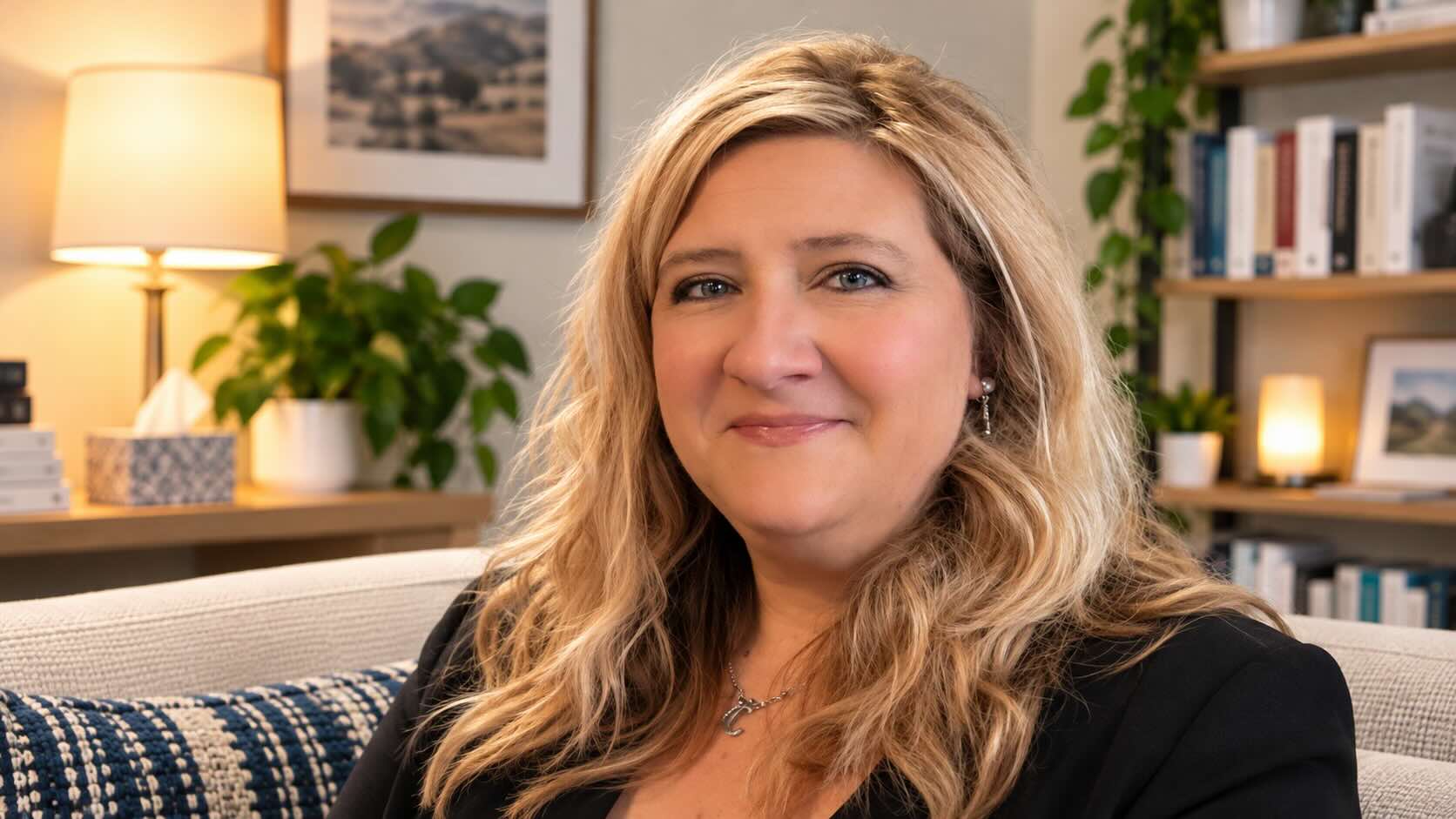
Colleen Druga
LPC · Licensed Professional Counselor
Locations: Robinson · South Hills · Telehealth
Skills: TF-CBT, Somatic Techniques, Mindfulness-Based
Services: Trauma Therapy, Addiction, Anxiety Treatment
Trauma may fracture the self, but therapy helps you return home to who you are.
Colleen Druga, LPC, brings 24 years to trauma-informed therapy, anxiety, depression, and co-occurring addiction — whole-person work across mind, body, and spirit.
CONDITION GUIDE
Tech addiction guides from our therapists

Technology Addiction
Influencer Culture & Mental Health: When Life Becomes Content
Influencer culture and constant sharing can gradually turn your real life into raw material for a public, curated version of it. Over time the incentives can reverse — you start making decisions about the life you live based on what you can post. Signs worth noticing include distress when engagement drops, loss of privacy, sharing children’s lives without their consent, and feeling unable to stop. Therapy can help you reclaim a private life and decide what your relationship with being watched should be.

Technology Addiction
AI Addiction & Emotional Dependency
AI addiction is an informal term for problematic or compulsive artificial intelligence use. Emotional dependency can develop when someone increasingly relies on chatbots for reassurance, companionship, or decisions. Warning signs include social withdrawal, disrupted sleep, loss of control, and reduced confidence in personal judgment. Therapy can help people establish healthier boundaries, rebuild relationships, and use AI without allowing it to dominate their lives.

Technology Addiction
AI Therapy vs. a Human Therapist: The Real Difference
AI chatbots can offer information, available any hour, and a place to put your thoughts — and for some people they’re a helpful first step. But they are not a substitute for human therapy. Real, lasting change happens through a genuine relationship: being truly seen and attuned to, working through difficulty with another person, and a trust an AI cannot form. For anything serious — trauma, depression, crisis — a licensed human therapist is essential. David Como, NCC, has practiced for more than 30 years in the Pittsburgh area.

Technology Addiction
Social Media Addiction: Signs, Effects & Taking Back Control
Social media addiction describes problematic or compulsive social media use that becomes difficult to control and interferes with daily life. Warning signs include disrupted sleep, neglected responsibilities, relationship conflict, and unsuccessful attempts to reduce use. Therapy can help identify what drives the behavior, develop healthier habits, and rebuild meaningful activities and relationships without requiring someone to abandon technology entirely.

Technology Addiction
Social Media Addiction: Signs, Effects & Taking Back Control
Social media addiction describes problematic or compulsive social media use that becomes difficult to control and interferes with daily life. Warning signs include disrupted sleep, neglected responsibilities, relationship conflict, and unsuccessful attempts to reduce use. Therapy can help identify what drives the behavior, develop healthier habits, and rebuild meaningful activities and relationships without requiring someone to abandon technology entirely.
READY TO START?
The next hour can belong to you
Nothing about this gets easier by waiting. The loop is designed to keep running, and every week it runs it takes a little more — your sleep, your attention, the people who’ve stopped asking. You don’t need to have quit anything before you walk in, and you don’t need a plan. You just need to stop negotiating with it on your own.