Technology & Mental Health
AI Therapy vs. a Human Therapist: What 30 Years Has Taught Me About the Difference
An AI can listen. It cannot be in a relationship with you — and the relationship is where the healing happens.
AI chatbots can offer information, available any hour, and a place to put your thoughts — and for some people they’re a helpful first step. But they are not a substitute for human therapy. Real, lasting change happens through a genuine relationship: being truly seen and attuned to, working through difficulty with another person, and a trust an AI cannot form. For anything serious — trauma, depression, crisis — a licensed human therapist is essential. David Como, NCC, has practiced for more than 30 years in the Pittsburgh area.
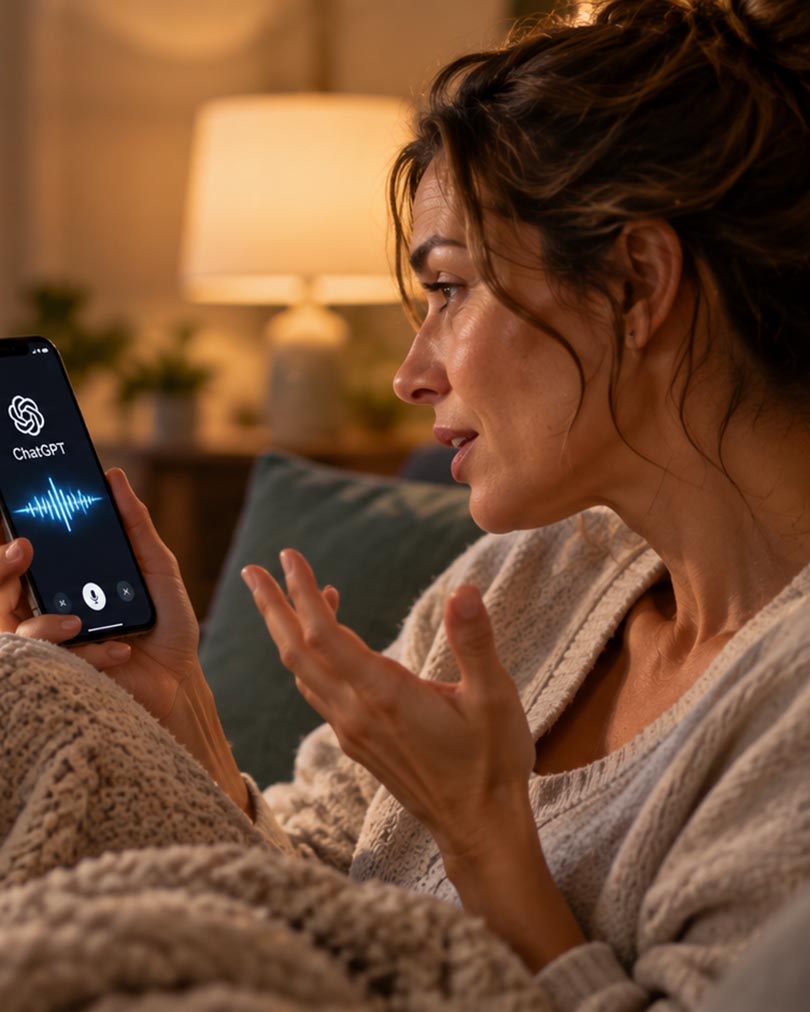
In more than thirty years of sitting with people, I’ve watched a great deal change — new theories, new medications, new language, new technology. The newest arrival is AI, and a lot of people are now “talking it out” with a chatbot at eleven at night instead of booking an appointment. I don’t say that with alarm. I say it as someone who has spent three decades learning exactly what helps a person change, which puts me in a decent position to tell you what an AI can and can’t do.
What AI Can Actually Do
Let me be fair to it. An AI can hand you solid information about a diagnosis or a coping skill. It’s available at any hour, which matters at two in the morning when no office is open. It can be a judgment-free place to put words to something you’ve never said out loud, and for some people that first articulation is genuinely valuable. It can lower the fear that keeps people out of therapy entirely. None of that is nothing, and I’d never dismiss it.
What It Cannot Do
But here is what three decades have made unmistakable to me: the thing that actually heals people is not information. It’s relationship. An AI cannot be in one with you. It can produce the words of empathy, but it cannot be moved by you — can’t be surprised, can’t carry you in mind between sessions, can’t notice that your voice went flat when you mentioned your father and gently stay there. It doesn’t read your body, the long pause, the thing you’re not saying. And it cannot do the slow, irreplaceable work of being a steady, trustworthy human presence across time, so that you learn — in your nervous system, not just your thoughts — that you can be fully known and not abandoned. That learning only happens with another person.
Why the Relationship Is the Medicine
This isn’t just my sentiment; it’s one of the most robust findings in the field. Across decades of research, the quality of the therapeutic relationship predicts outcomes more reliably than any particular technique. I’ve lived that truth in the room thousands of times. People don’t transform because I explained their pattern to them — they could get an explanation anywhere now, including from a chatbot. They transform because something real happens between us: they bring their guardedness, and it slowly becomes safe to set it down. An AI has no self to offer into that exchange, which means the central ingredient simply isn’t there.
When AI Is Genuinely Risky
I want to be direct about this part, because it matters. An AI will often tell you what keeps you engaged, which is not the same as what you need to hear. It can validate a distortion, miss the seriousness of what you’re describing, or quietly become something you lean on in a way that deepens isolation rather than easing it. And in a crisis — real hopelessness, trauma resurfacing, thoughts of not wanting to be here — it is no substitute for a person trained to help you stay safe. If you’re anywhere near that edge, please reach a human: call or text 988.
Use It as a Doorway, Not a Destination
So here’s my honest counsel, from someone who has no fear of being replaced by a chatbot and no interest in pretending it’s useless. If talking to an AI helped you finally put words to what’s wrong — good. Let it be the doorway, not the destination. The understanding it offered is the beginning of the work; the relationship that actually changes things is the rest of it. When you’re ready to do that part with a real person, I’d be glad to be that person. Thirty years in, I still believe the most healing thing in the world is to be genuinely seen by another human being — and that’s the one thing no machine can offer you.
About David Como
David Como, NCC is a therapist at CPA Counseling’s Robinson and South Hills offices with over 30 years of experience. He offers individuals and couples an empathetic, person-centered, holistic space — drawing on somatic, existential, and mindfulness-based approaches to help people navigate anxiety, depression, trauma, relationships, addiction, and life’s transitions.