Technology & Mental Health
When Your Life Becomes Content
Influencer culture, oversharing, and the quiet pressure to perform your life instead of live it.
Influencer culture and constant sharing can gradually turn your real life into raw material for a public, curated version of it. Over time the incentives can reverse — you start making decisions about the life you live based on what you can post. Signs worth noticing include distress when engagement drops, loss of privacy, sharing children’s lives without their consent, and feeling unable to stop. Therapy can help you reclaim a private life and decide what your relationship with being watched should be.
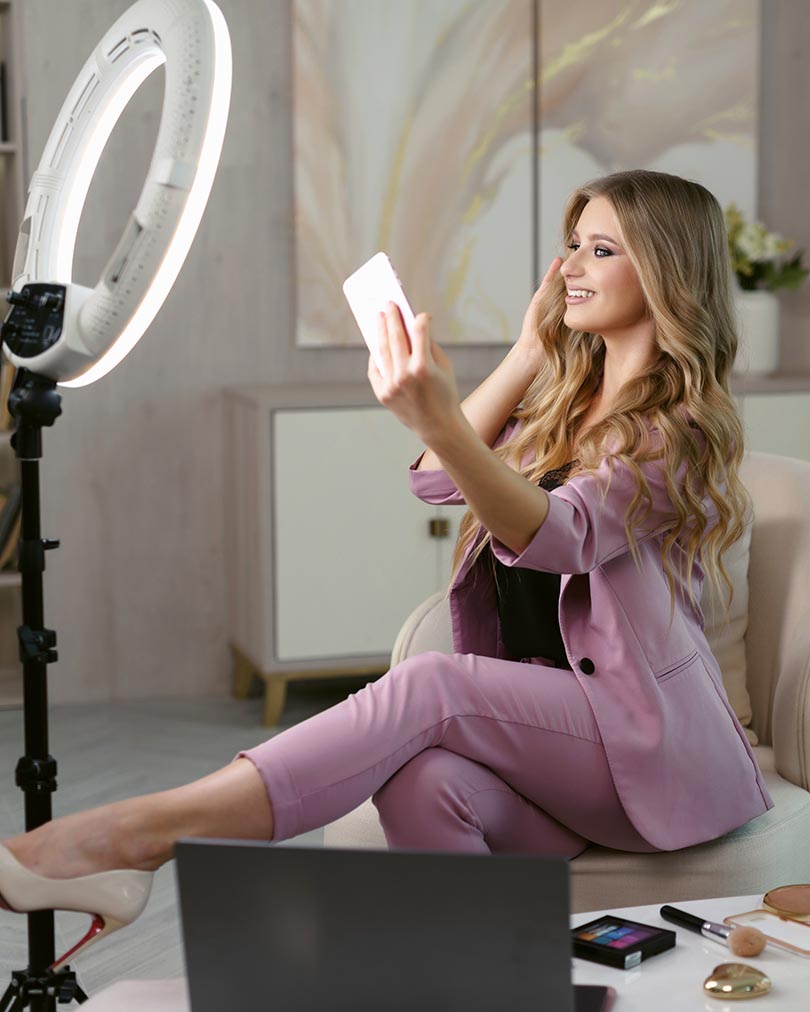
A family is on vacation. The light is perfect. One child wants to go swimming, another is hungry — but everyone waits. Move over. Do that again. Smile. Someone takes thirty pictures. Mom picks one, adds a caption and a filter, and posts it. The photo says: Best day with my favorite people.
And maybe it really was a good day. That’s what makes this so psychologically interesting. The question I’ve found myself asking more and more, after two decades of this work, isn’t whether the moment was real. It’s this: At what point did experiencing the vacation become less important than producing the evidence that you experienced it?
This isn’t an article about how wanting to be an influencer is unhealthy. It’s about a subtler, more common shift — the way an ordinary life can gradually become raw material for the public version of that life, until, eventually, the incentives quietly reverse. Instead of deciding what to post about the life you’re living, you begin making decisions about the life you’re living based on what you can post.
Social Media Gave Everyone an Audience
Social media began as a way to share pieces of your life. Influencer culture introduced another possibility: your life itself could become a product. Followers, engagement, brand partnerships, affiliate links, recognition, status, and — for some — income. And because almost anyone can theoretically make it, ordinary posting can slowly turn into an audition. You’re not just sharing a moment anymore; some part of you is checking how it performs.
The Demo Version of Your Life
Here’s the idea I want to give you, because once you see it you can’t unsee it: most feeds aren’t fake. They’re something trickier — selectively true. The kitchen really does look beautiful from that angle. The children really were laughing. The marriage really did have that affectionate moment. The vacation really was wonderful. Nothing in the post is a lie.
But stitched together, the feed becomes a curated demonstration — a demo version of your life. This is who I am. This is my marriage. These are my children. This is how happy and successful and interesting we are. And then comes the distortion that does the real damage: what happens when you begin comparing your actual, ordinary life to the edited demonstration of your own life? That’s a long way past regular social comparison, and it’s quietly corrosive.
When You Become Your Own Audience
Traditional comparison is “their life looks better than mine.” The distortion I’m describing is stranger: “my life doesn’t look as good as my own feed.” The person becomes, all at once, the one living the life, the producer, the editor, the brand, and the audience evaluating the product. That changes what even counts as a worthwhile experience. A dinner nobody photographs can start to feel oddly invisible — as if it didn’t quite happen because there’s no record, no response, no little rush of confirmation that it mattered.
When Experiences Become Content Opportunities
Watch the progression, because it’s gradual. A meal becomes content. A vacation becomes content. A child’s birthday becomes content. Pregnancy becomes content. A breakup becomes content. Grief becomes content. Even therapy becomes content. At some point the camera stops documenting the experience and the experience starts getting organized around the camera. Here’s a question I often ask, and I think it’s one of the most clarifying ones available: What would you still choose to do if no one were ever going to see it?
Your Children Never Agreed to Become Content
This deserves more than a passing mention. When parents share their children online — and many do, lovingly, as a way of documenting their parenting journey — they can end up disclosing an enormous amount: names, birthdays, schools, medical conditions, behavioral struggles, tantrums, embarrassing stories, developmental issues, mental-health concerns, puberty, dating, discipline, family conflict, highly emotional moments. The parent experiences this as sharing their story. But the child is simultaneously accumulating a public digital biography they never chose and can’t take back. The central ethical question is quietly enormous: whose story is it?
Your Child’s Hard Moment Isn’t Your Content Opportunity
Picture a child crying. A teenager going through a breakup. A kid struggling with behavior. A family receiving a difficult diagnosis. Before social media, the parent’s first question was almost reflexive: what does my child need right now? The incentives of sharing can introduce a second, competing question: should I post this? Those two questions can pull in opposite directions — and when they do, the child’s need has to win. I say this not to shame any parent, but because the pull is real and worth naming before it decides for you.
When the Family Becomes the Brand
When an account grows, family life can start to reorganize around it. Children may learn that private moments can become public, that a parent’s attention shifts when the camera comes out, that ordinary activities can turn into production, and that they’re expected to participate. Spouses may disagree about boundaries. And if the content starts generating income, stopping gets materially harder — now there’s a financial reason to keep sharing even when someone in the family has outgrown it. Not every creator family works this way; the point isn’t judgment, it’s noticing where incentives and boundaries quietly collide.
The Audience Starts Participating in Your Family
There’s a parasocial dimension here that runs the other direction from the usual one. It’s not only that followers feel they know the family — it’s that the creator now has thousands of people emotionally invested in a particular version of their family. Strangers know the children’s names. They comment on parenting decisions, pick favorites, speculate about the marriage, notice a child’s changing body, weigh in on everything. Once that many people are invested in the story, changing the story — pulling back, going private, letting the kids opt out — becomes surprisingly difficult.
What Happens When Reality Doesn’t Fit the Brand?
Then life does what life does. Marriage trouble. Depression. Money problems. A teenager who no longer wants to appear. Weight changes. A career setback. Someone simply wanting privacy. And the person runs into a strange modern problem: my actual life is interfering with the life I’ve been showing everyone. The responses I see — hiding, staging, denial, escalating disclosure to keep the engagement up, anxiety, a feeling of being trapped by what the audience expects — are the heart of the reality-distortion this whole piece is about. The demonstrated life starts making demands on the lived one.
Is Wanting Followers an Addiction?
No — and I want to be clinically careful here. Wanting recognition isn’t a diagnosis. Posting often isn’t pathology. Earning a living as a creator isn’t unhealthy. The useful questions aren’t about frequency; they’re about control, consequences, and choice. Can you choose not to post? Can an important experience stay private? Can your child say no — and can your spouse? Can you enjoy something that generates no content at all? Can you tolerate a dip in engagement without it rattling you? Can you change your mind about what your audience expects of you? Those are the questions worth sitting with.
Imagine Having a Private Life Again
Picture it. You’re at dinner, and nobody photographs it. Your child tells you something important and your first thought isn’t whether other parents would relate to it. You take a vacation and post three pictures — or none. Something wonderful happens and it belongs only to your family. Something painful happens and you protect it. Your kids come to understand that what they tell you doesn’t automatically become everyone else’s story. And maybe most importantly: you stop needing strangers to confirm that the life you’re living is worth living. That’s the destination — not a life with no phone, but a life that’s yours again.
Therapy Isn’t About Deleting Instagram
When people come in around this, we’re almost never talking about quitting social media. We’re looking at harder, more interesting questions. What am I seeking from the audience? What happens inside me when the engagement falls? Which parts of my identity have quietly fused with my online persona? Which relationships have changed? Where have my family’s boundaries drifted without anyone deciding to move them? What do I actually want to keep private? And underneath all of it, the question I’d leave you with — the one this entire article is really about: who am I when nobody is watching? Learning to like that answer is the work worth doing.
About Cristina Panaccione
Cristina (Crissy) Panaccione, LPC is the founder and director of CPA Counseling, with over two decades of experience. She helps individuals, couples, and families across Pennsylvania build healthier relationships — with each other, and with the technology that shapes daily life.
READY TO START?
Put yourself back in charge of the life it should serve
You don’t need strangers to confirm that your life is worth living. Therapy can help you step out of the performance, protect what matters, and answer the only question that really counts here: who are you when nobody is watching?