
SOUTH HILLS, PA · TELEHEALTH STATEWIDE
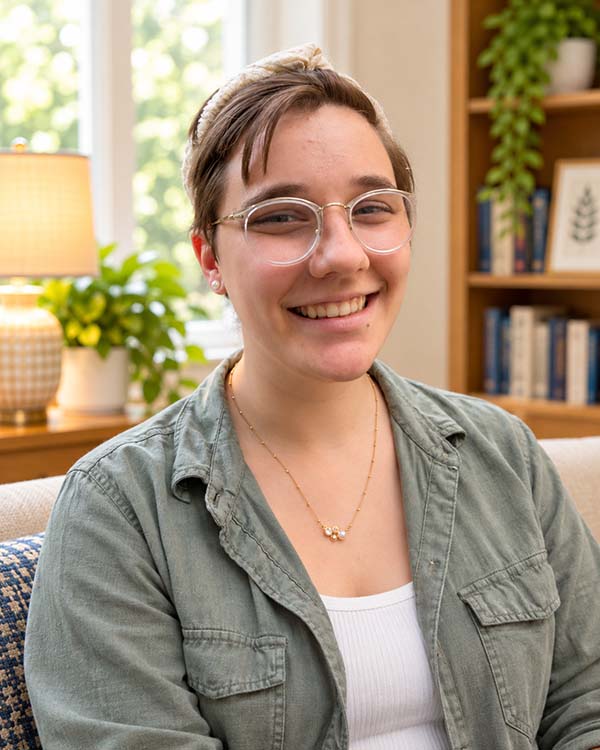
Jaye Sobieski, MS
“Each person holds valuable insights into their own healing.”
Jaye Sobieski is a pre-licensed mental health counselor at CPA Counseling’s South Hills office, also seeing clients by secure telehealth across Pennsylvania. She works with teens and adults on trauma, anxiety, depression, ADHD, grief and loss, emotional abuse, life transitions, and self-esteem, with particular focus on LGBTQIA+ clients, disability, and neurodivergence. She is EMDR trained and practices under supervision.
WHO JAYE WORKS WITH
Who she’s for
Jaye works with teens, young adults, and adults, individually. She is a pre-licensed counselor practicing under the supervision of Tess Inman, LPC, NCC, which means your care is reviewed by an experienced clinician behind the scenes.
why work with Jaye
You already know more than you think
Maybe something happened and you have not found your footing since. Maybe you are tired of managing how much of yourself a room can take. Jaye works from the belief that you hold real insight into your own healing — her job is helping you reach it, not supplying it.
HOW JAYE WORKS
Ten approaches, chosen for you
Jaye is trained across a wide range of approaches and chooses based on what is actually in front of her. Two people with the same diagnosis often get very different work.
CONDITIONS TREATED
What Jaye treats – who Jaye sees
- Trauma
- Anxiety
- Depression
- ADHD
- Grief & Loss
- Emotional Abuse
- Controlling Relationships & Gaslighting
- Codependency
- Life Transitions
- LGBTQ+
- Disability & Neurodivergence
- School / Academic
- Workplace Stress
- Chronic Pain
- Self-Esteem
For trauma
EMDR therapy — a route that does not require retelling
“Healing is possible with the right mindset and a thoughtful, personalized plan.”
CARE PHILOSOPHY
Collaborative. Not prescriptive.
Jaye starts from a specific premise: you already hold valuable insight into your own healing. That is not a compliment — it is a working method. The sessions are built to get at what you already know and make it usable, rather than handing you a framework and asking you to fit inside it.
What stays constant is the room itself. Compassionate and nonjudgmental, which in practice means you are not managing her reaction while you say the difficult part. For clients who are LGBTQIA+, disabled, or neurodivergent, that matters in a specific way: the basics of your life are not up for explanation before the work can start.
From there it is practical. Finding the strengths already in play, building tools that fit your actual circumstances, and — when trauma is what brought you in — using EMDR to reduce what the memory still does to you now. She believes healing is possible with the right approach and a plan made for you specifically.
ABOUT JAYE
A space where you feel seen, supported, and respected
Jaye Sobieski brings a collaborative and empowering approach to therapy, guided by the belief that each person holds valuable insights into their own healing. She creates a compassionate, nonjudgmental space where clients feel seen, supported, and respected.
She holds a Master of Science in Clinical Mental Health Counseling from the University of Pittsburgh and is a National Certified Counselor, trained in EMDR therapy. Her background includes work with people navigating some of the harder transitions — identity development, emotional recovery, and the aftermath of trauma.
Her clinical focus centers on trauma, grief, LGBTQIA+ concerns, disability, and neurodivergence, alongside anxiety, depression, ADHD, emotional abuse, and self-esteem. She describes her ideal client as someone struggling to find footing after one or many traumas, looking to use EMDR, DBT methods, or similar approaches to find a route back to a workable normal.
By helping clients recognize and build on strengths they already have, Jaye supports the development of practical tools for growth. She works with teens and adults, in person at the South Hills office and by telehealth across Pennsylvania, and practices under the supervision of Tess Inman, LPC, NCC.
Trained
Plus DBT, IFS and somatic work
Trauma, LGBTQIA+ & Neurodivergence
A combination rare in this region
Personalized Care Plans
No program commitments required
CONDITION GUIDE
Therapy guides from Jaye Sobieski

LGBTQ+
What Is LGBTQ+ Affirming Therapy?
LGBTQ+ affirming therapy does not treat being LGBTQ+ as a problem to fix. It means a therapist who is competent, trustworthy, and affirming, so you can bring your whole life into the room — whether you’re there for anxiety, depression, relationships, grief, or anything else. Affirming therapy never includes conversion or "change" efforts, which are harmful. The goal is a life where you don’t have to become less of yourself to belong.

Family
Your Dreams on Hold: Are You Living Vicariously Through Your Child?
Living vicariously through your child means pinning your own unmet dreams or self-worth on their performance. It usually comes from love, but it can raise a child's anxiety and reverse healthy roles. Tess Inman, LPC helps parents and families across Altoona recognize these patterns and build healthier connection — in person or by telehealth across Pennsylvania.

Technology Addiction
AI Therapy vs. a Human Therapist: The Real Difference
AI chatbots can offer information, available any hour, and a place to put your thoughts — and for some people they’re a helpful first step. But they are not a substitute for human therapy. Real, lasting change happens through a genuine relationship: being truly seen and attuned to, working through difficulty with another person, and a trust an AI cannot form. For anything serious — trauma, depression, crisis — a licensed human therapist is essential. David Como, NCC, has practiced for more than 30 years in the Pittsburgh area.