SOUTH HILLS, PA · TELEHEALTH STATEWIDE
Tess Inman, MSEd, LPC, NCC
“The trust built within a therapeutic relationship allows us to be more vulnerable, and to carry what we learn into everyday life.”
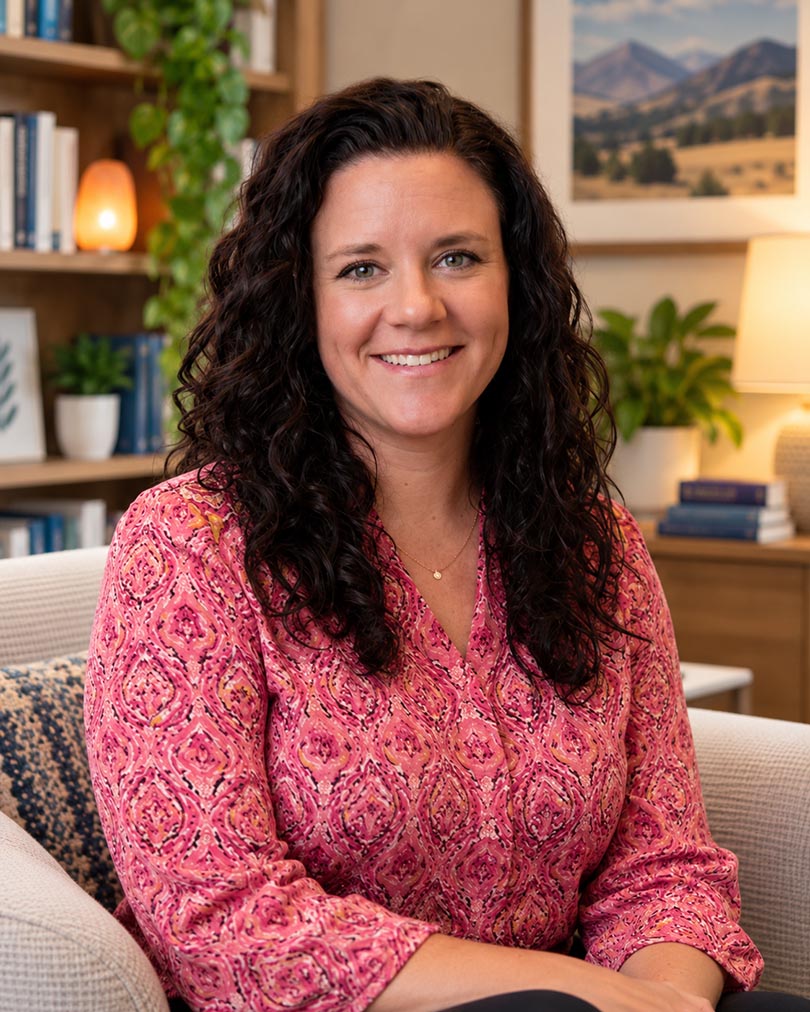
Tess Inman is a Licensed Professional Counselor and Director of Clinical Services at CPA Counseling’s South Hills office, also seeing clients by secure telehealth. She specializes in couples and families, and in individuals working through relational and systemic difficulty, using the Gottman Method, Structural Family Therapy, and Systems Theory.
WHO TESS WORKS WITH
Who she’s for
Tess works with adults, couples, and families. Her specialism is relational and systemic work — the difficulty that lives between people rather than inside one of them.
why work with Tess
Trust first, then the work
She stresses rapport-building as a clinical necessity rather than a courtesy: the trust built in a therapeutic relationship is what allows real vulnerability, and what makes skills learned in session transfer to everyday life.
HOW TESS WORKS
Eight approaches, and a systemic lens
Tess works from the position that therapy must be tailored to the client. Underneath the specific methods sits a systemic view — looking at how people are arranged around each other, not only at what each one is feeling.
CONDITIONS TREATED
What Tess treats – who Tess sees
- Marriage & Couples
- Premarital Counseling
- Family Issues
- Controlling Relationships & Gaslighting
- Anxiety
- Depression
For couples and families
Director of Clinical Services — and a clinical supervisor
“An approach to therapy needs to be tailored to the needs of the client.”
CARE PHILOSOPHY
Collaborative. And built on trust.
Collaborative and grounded in trust, in Tess’s description. She stresses the importance of building rapport in order to better meet a client’s clinical needs — and believes the trust that develops is what lets people be vulnerable enough for the work to transfer out of the room and into everyday life.
ABOUT TESS
Growth, grounded in collaboration
Tess Inman is a Licensed Professional Counselor and Nationally Certified Counselor specializing in couples and families, as well as individuals working through relational and systemic difficulty.
She completed her Master’s in Counselor Education at Duquesne University in 2013, and since then has worked extensively with couples and families using the Gottman Method, Structural Family Therapy, and Systems Theory — helping clients improve communication, regain emotional safety, rebuild trust and intimacy, and practice healthy conflict resolution.
Her approach involves supporting growth by being grounded in the collaborative process between client and clinician. She believes the trust built within a therapeutic relationship allows people to be more vulnerable, and to transfer the skills learned in session into everyday life. She stresses the importance of building rapport with clients in order to better meet their clinical needs.
Tess believes an approach to therapy needs to be tailored to the needs of the client, and her clinical experience and extensive training span cognitive behavioral therapy, the Gottman Method, Structural Family Therapy, and Systems Theory.
Alongside her own caseload she serves as Director of Clinical Services and as a clinical supervisor within the practice. She is currently offering both in-person and virtual sessions, at the South Hills office and by telehealth across Pennsylvania.
Practicing Since
MSEd Duquesne, 2013
Gottman Trained
Research-based couples therapy
Personalized Care Plans
No program commitments required
CONDITION GUIDE
Therapy guides from Tess Inman

Mental Health
Why Insight Doesn’t Always Change Behavior
You can fully understand a pattern — why you do it, where it comes from, what it costs — and still repeat it, because insight alone doesn’t change behavior. Old patterns are automatic and live in the nervous system, not just the thinking brain, and self-criticism tends to make change harder, not easier. Change is a practice built on reps and self-compassion, not a single decision. Dana Werner, LMSW helps clients bridge the gap between knowing and doing at CPA Counseling in Pittsburgh’s Robinson area and by telehealth across Pennsylvania.

Addiction
Addiction Therapy in Pittsburgh’s South Hills
Addiction therapy can address far more than stopping substance use. It can help you understand what alcohol or drugs have been doing for you, develop other ways to manage difficult emotions, and begin building a life that is no longer organized around using. Nicole Duley, LPC provides therapy for substance use and related concerns through CPA Counseling’s South Hills office in Pittsburgh and by telehealth across Pennsylvania.

Anxiety
When the Feeling Arrives Before the Thought
Sometimes your body reacts before your mind catches up — your chest tightens, you snap, you’re suddenly not okay and nothing happened in between. That isn’t a malfunction; the body’s threat response simply runs faster than conscious thought. Body-based (“somatic”) regulation skills — slow out-breaths, orienting, grounding — help you settle in the moment. Jaye Sobieski, MS, NCC, EMDR trained, works with trauma at CPA Counseling in the South Hills and by telehealth across Pennsylvania.