
TELEHEALTH STATEWIDE · SOUTH HILLS, PA
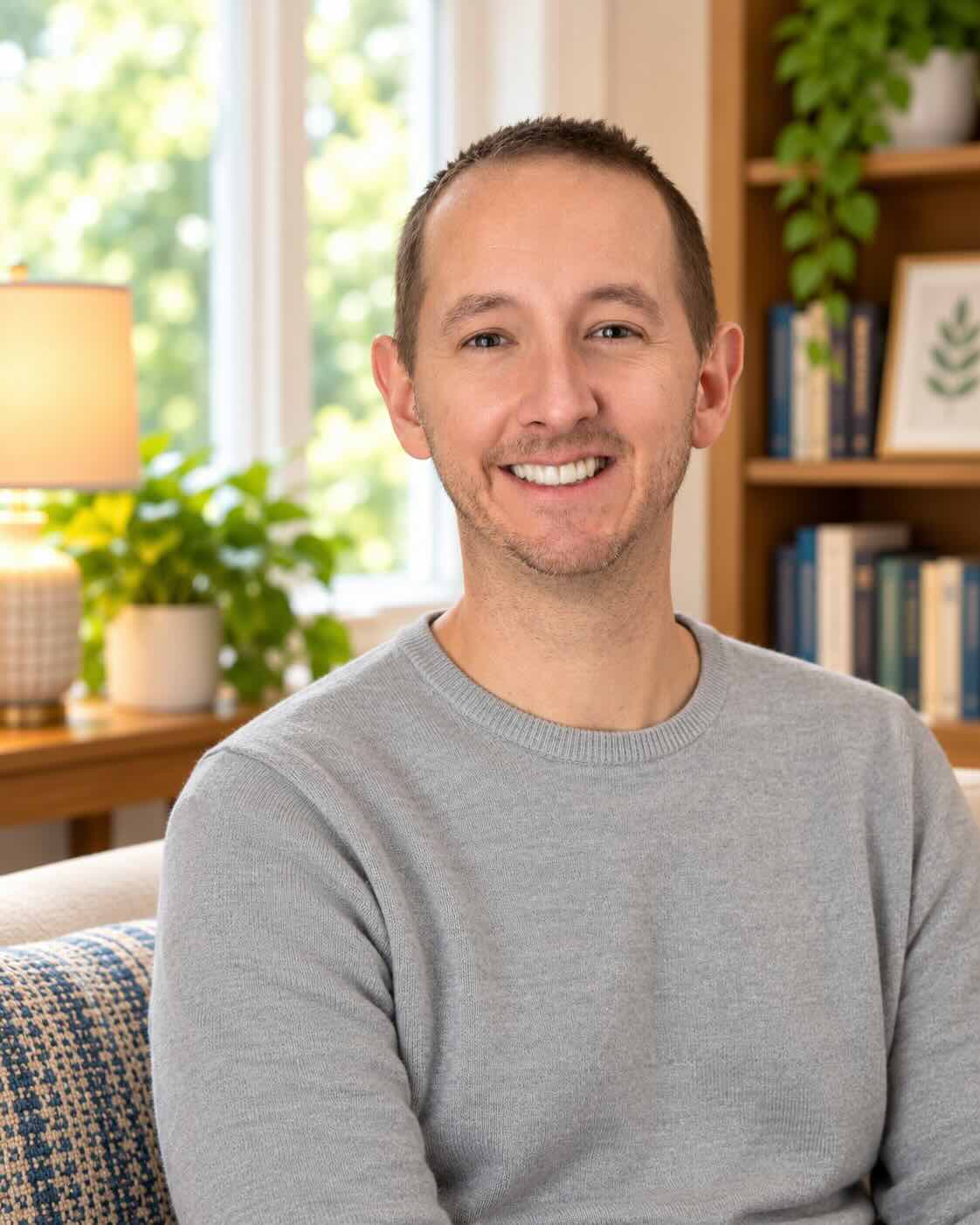
Michael Breitenbach, MS, LPC
“Talent means nothing, while experience, acquired in humility and with hard work, means everything.”
Michael Breitenbach is a Licensed Professional Counselor at CPA Counseling, working primarily by secure telehealth across Pennsylvania, with in-person appointments available at the South Hills office. He has been counseling since 2004 and has been licensed since 2008; he works with adults, couples, teens, and families on anxiety, depression, addiction, relationships, and life transitions — with a particular focus on young adults, technology addiction, and men seeking therapy.
WHO MICHAEL WORKS WITH
Who he’s for
Michael works with adults, teens, young adults, couples, families, seniors, and veterans. Women, men, LGBTQ+ clients, college students. Primarily by telehealth across Pennsylvania, with in-person appointments available at the South Hills office.
why work with Michael
Generativity, not stagnation
His guiding frame, from Erikson: generativity is about giving back — raising children, being productive at work, taking part in something larger. People who have lost that thread often arrive describing it as something else entirely.
HOW MICHAEL WORKS
Fourteen approaches, tailored each time
The widest toolkit in the practice, and twenty-two years of judgment about which part to use. His stated belief is that therapy should be tailored to the individual rather than run as a protocol.
CONDITIONS TREATED
What Michael treats – who Michael sees
- Anxiety
- Depression
- Trauma
- ADHD
- Addiction
- Technology Addiction
- Marriage & Couples
- Family Issues
- Emotional Abuse
- Codependency
- Life Transitions
- Grief & Loss
- Men
- Workplace Stress
- Self-Esteem
For addiction
Federally registered in addiction — the only one here
“Everyone has the potential to reach their full potential, and I am committed to helping my clients get there.”
CARE PHILOSOPHY
Tailored. And it asks for your effort.
Tailored to the individual, in Michael’s words, which is why the toolkit is as wide as it is. He is highly experienced in CBT, psychodynamic therapy, and the Gottman approach, and he is explicit that his ideal client is internally motivated and willing to put in the work — this is collaborative, not delivered.
ABOUT MICHAEL
Purpose, and fulfillment
Michael Breitenbach is a highly experienced clinician influenced by Erik Erikson’s social development theory, focused on the seventh stage: generativity versus stagnation.
He believes generativity is about giving back to society — raising children, being productive at work, and taking part in community — and works with clients toward purpose and fulfillment. People who have lost that thread often arrive describing it as something else entirely.
Michael is highly experienced in cognitive behavioral therapy, psychodynamic therapy, and the Gottman approach for couples’ communication, and believes an approach to therapy must be tailored to the individual rather than run as a protocol. Alongside sessions he provides resources and helps clients build an actual plan for a healthier life.
As a telehealth therapist he has found that many people value the freedom it offers, and that it has empowered men to seek therapy at a higher rate, reducing the stigma that has kept many of them away. He has a particular passion for working with young adults navigating peer pressure and social media — as a father of four children ranging from toddler to young adulthood, he understands those pressures directly.
He holds a Master of Science in Counseling from Chatham University, is federally registered in addiction counseling, and sees clients by telehealth across Pennsylvania and in person at the South Hills office.
Approaches Used
The widest toolkit here
Addiction & Technology
Federally registered in addiction
Personalized Care Plans
No program commitments required
CONDITION GUIDE
Therapy guides from Michael Breitenbach

Mental Health
Stepping Away from Guilt: Real vs. Unreal Guilt
Guilt can be healthy — a signal that helps us course-correct and grow. But "unreal" guilt, rooted in anxiety rather than genuine wrongdoing, adds stress and can fuel depression and anxiety without helping us change anything. Learning to tell the two apart, and to practice self-compassion, helps. Ashley Spahn, LCSW helps clients across Pittsburgh’s South Hills.

Depression
Cognitive Distortions: Restructure Your Thoughts
Cognitive distortions are habitual, inaccurate thinking patterns — like all-or-nothing thinking, catastrophizing, mind-reading, and harsh self-labeling — that fuel depression and anxiety. Cognitive restructuring is the CBT skill of catching those thoughts, questioning them, and replacing them with fairer, more accurate ones. Ashlie Mohney, LPC helps clients across Pittsburgh’s Robinson area learn these skills, in person or by telehealth across Pennsylvania.

Anxiety
Tea for Anxiety: Does It Help?
Certain teas — chamomile, green tea (for its L-theanine), lavender, and lemon balm — may gently ease anxiety, and the calming ritual of a warm cup can help settle an overwound nervous system. Tea is a complement, not a treatment, and herbal supplements can interact with medications, so check with your doctor. Lindsay Mazza, MS helps clients across Pittsburgh’s Robinson area calm anxiety at the root, in person or by telehealth across Pennsylvania.